Monday, June 17, 2013

Acting school

When the typical person first thinks of medical school, they imagine people bent over textbooks in the library, or maybe standing around a cadaver. To be honest, that was my first impression as well. However, after entering medical school, I've come to realize that part of it is like acting school.

I mention this because we have an OSCE coming up. I could probably look up what that stands for, but to be completely honest, I've only ever seen the long form of this acronym maybe once (as a side note, medicine is a storm of acronyms...arguably one of the most overwhelming aspects of learning 'the language'). In any case, the acronym aside, an OSCE is basically a series of stations in which you are given short prompts and then told to respond to them appropriately. At my level, this generally refers to taking a history, doing a physical examination, or a mix of both.

Personally I think the actual content/knowledge required is not all too difficult (knock on wood). However, each station is only a couple of minutes long (~10 min) so time management can be quite the struggle, especially if the condition is complicated and both the history and physical extensive (infective endocarditis comes to mind).

It makes absolute sense to test in this way, as this is probably the best way to see how we will perform in an actual patient encounter. However, that doesn't help to decrease the performance anxiety that exists. In fact, OSCEs are such a well-known test that there are tons of books out there filled with checklists of what examiners could look for in a particular scenario. For example,
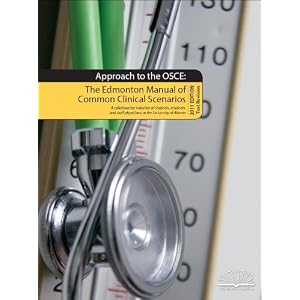

When you crack open one of these books, it's kind of overwhelming to see the possible scenarios and their associated lists. Borrowing from Amazon, a sample page: 
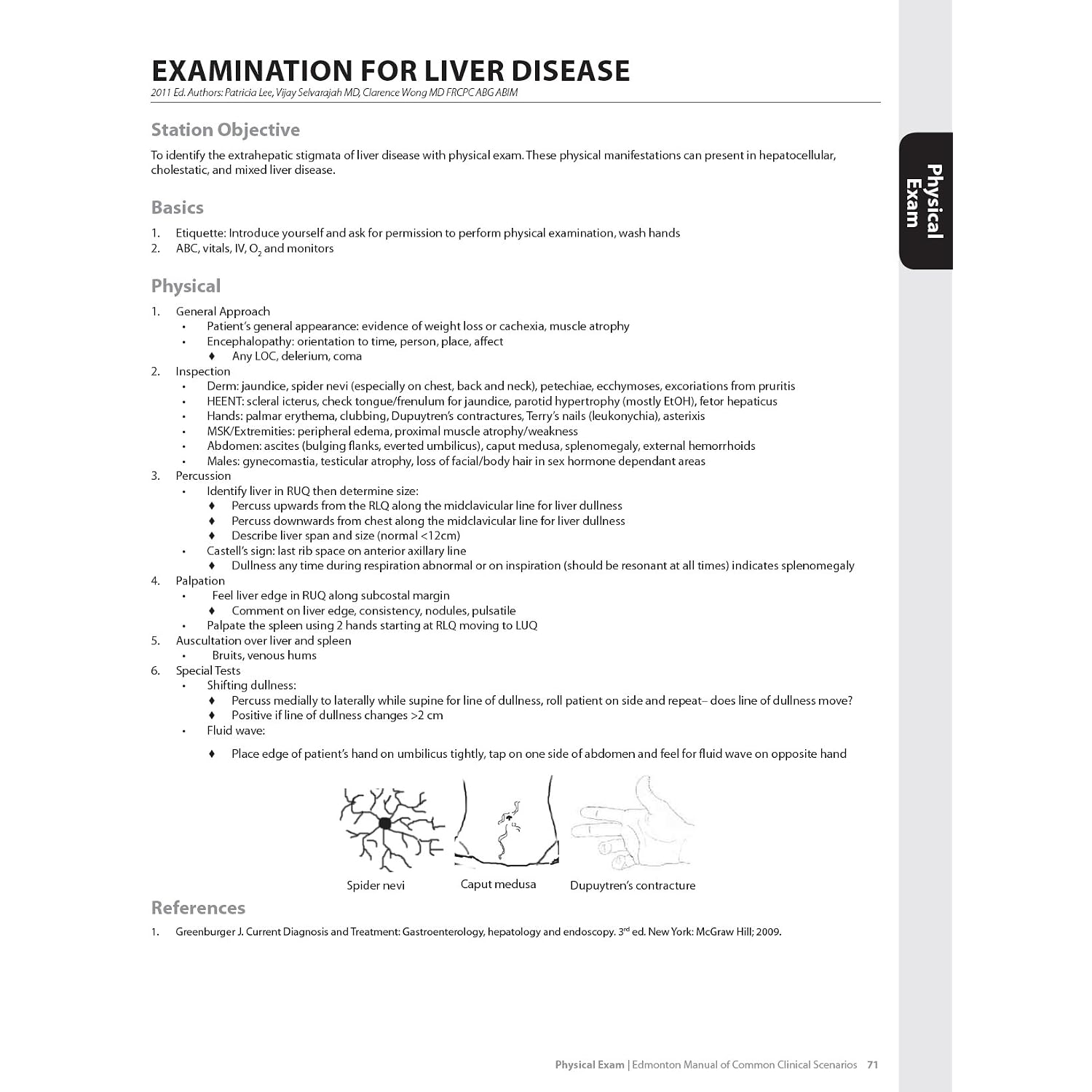

Although it's fairly organized here, in the heat of the situation it's sometimes difficult to remain organized during the actual thing, especially if you factor in nerves and the amount of information that has to be covered.

Anyways, my first OSCE is just around the corner; here's to hoping that it will go well!

When you watch a child die


While exploring the blogosphere, I happened to come across this extremely moving post about the moment when you watch a child die. It is an exceptionally well-written post, and for anyone interested in healthcare, I feel like it is a worthwhile read.

Additionally, I've set up a blog roll on the side to introduce any other blogs I may find interesting as I go on.

Sunday, June 16, 2013

Looking back on a year

Kind of unintentional, but I left this blog to sit and rot for nearly a year.

The past couple of months has been a whirlwind of activity. Particularly at the beginning, there was so much adjustment to be made that I wondered whether I would ever get used to it. Of course in hindsight it seems like such a silly thing, but it was a source of considerable stress at the beginning (in case you can't tell, I am not a fan of a change in my environment).

The other thing that really took getting used to was feeling stupid. All the time. Sure there are moments where I can answer a question, or happen to know an interesting fact, but the rest of the time is spent mostly in awe and a sort of terror at the amount of stuff I don't know. In medicine, we have this thing called 'pimping' wherein a senior in the medical world (can really be anybody) will ask you medicine-related questions out of the blue. Unfortunately, I've had to utter the words, "I don't know" in front of patients on quite a few occasions already in the past months. Fortunately however, as a medical student people expect you to know very little so my ignorance is still met with understanding and a subsequent desire to teach; I shudder a little at the thought of when I gain some more seniority (and I can't say I am confident that my knowledge will necessarily grow at the same pace).

That being said, you get used to the idea of not knowing things surprisingly quickly. The first month a few friends and I actually had to have a de-stress session because we were so distraught. Now I am a complete subscriber to the policy of pass/fail that is instituted in medical education. I work hard to absorb as much information as I can, but I've come to terms with the fact that I won't ever know everything, and that the 100% that had always been the target for the better part of my life has become an impossible dream. Sounds kind of depressing, but trust me, it's not...it has become much easier to enjoy my free time nowadays (less guilt!).

Looking forward, we are about to start a few weeks of clinical rotations. That means, as medical students (what we call 'pre-clerks'), we will be leaving the classroom behind completely and spending all our time in hospitals and clinics, gaining some hands-on experience. After several months of classroom teaching and lots of theoretical discussion of what goes on in the 'real world', it would be a lie to say that I'm not looking forward to it. At the same time, I will probably miss the opportunity to sleep in every now and then; not yet certain how my biological clock will handle a regimented schedule (and by no means am I a morning person, which unfortunately is at odds with the medical profession in general).

In any case, the clock hands have crept past midnight (again), so it's time to call it a day. An exam is just around the corner, so tensions are a bit high within the class; to be honest, we've been building up to it for so long that I just want it to be over. Hopefully I'll get some studying done tomorrow. That or enjoy a nice walk by the water. Or maybe I'll find a nice patio and have a little bit of both.